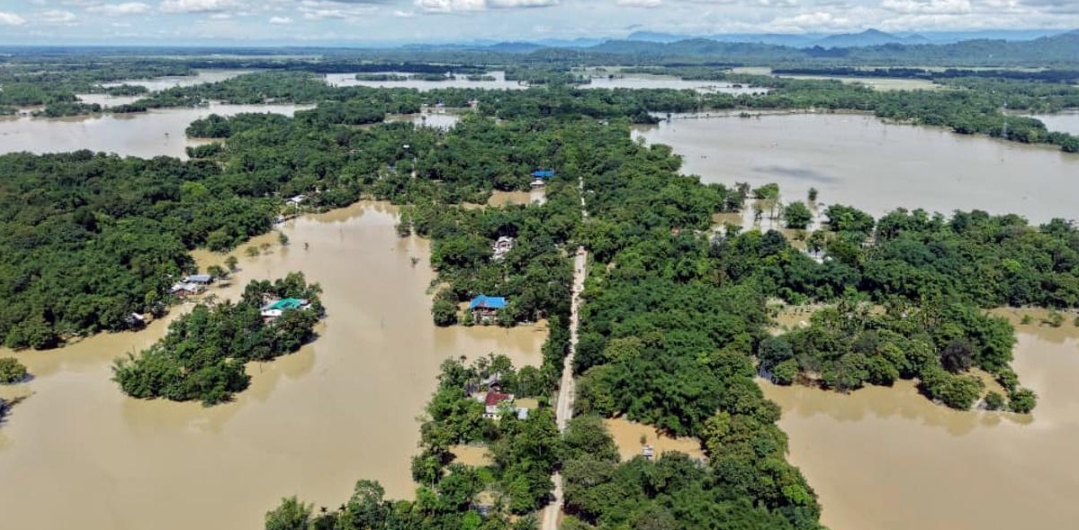
Sivasagar, Assam, July 29: Nepalikuti village in Assam’s Sivasagar district has suffered extensive damage following floods triggered by the overflowing Dikhow River, leaving hundreds of families without homes, livelihoods and basic necessities.
Residents said floodwaters entered the village around 11 am on July 19, inundating houses and agricultural land within a short time. The flooding washed away homes, cattle sheds, food grains, farming equipment, household belongings and livestock, causing widespread losses across the village.
Agriculture and dairy farming, the primary sources of income for many families, have been severely affected. Residents said the loss of cattle and other livestock has left many households without any means of livelihood. In several locations, dead animals remain in cattle sheds, raising concerns over sanitation and the risk of disease.
According to locals, many residents were forced to take shelter on the roofs of their houses as water levels rose rapidly. Several houses later collapsed under the force of the floodwaters. Residents claimed that around nine to ten people have either died or remain missing, while many families are still awaiting information about their relatives.
Speaking to media, resident Krishna Sharma said the floods had destroyed homes, livestock and livelihoods, leaving many families without food or shelter. He appealed to the government to provide immediate relief and compensation to those affected.
Although floodwaters have receded, large parts of the village remain buried under several feet of sand and silt. In many places, only portions of walls, bamboo structures and tin sheets are visible. Household items, including furniture, clothes, kitchen utensils, electronic appliances, vehicles and farming equipment, remain trapped beneath the debris.
Residents said they continue to face shortages of clean drinking water, food, shelter and medical facilities. Another villager told media that while the water had receded, their homes and belongings remained buried under sand and mud, making it difficult to resume normal life.
The floodwaters also deposited large quantities of trees, bamboo and other debris across the village, hampering rescue, cleaning and damage assessment efforts. The accumulation of debris has further delayed the removal of animal carcasses and restoration work.
The district administration has started clearing major roads to restore connectivity, but many internal roads and residential areas remain covered with sand and silt. Relief operations are continuing, though affected families say immediate assistance is still required.
Resident Devi told media that her family had lost their house, belongings and livestock, and appealed for food, safe drinking water, medical assistance, temporary shelter and compensation to help rebuild their lives.
Residents also said that important documents, cash, household items and agricultural equipment remain buried under the debris. Many families are now dependent on government assistance, voluntary organisations and community support.
The affected villagers have urged the government to accelerate cleaning operations, ensure the safe disposal of dead livestock, restore access to drinking water and healthcare, provide temporary shelter, and compensate farmers for the loss of crops, livestock and livelihoods.
The situation in Nepalikuti reflects the continuing challenges faced by flood-affected communities in Assam, where many families remain engaged in recovery efforts weeks after the floodwaters receded.