Political Analysis | CNC News | November 24, 2026
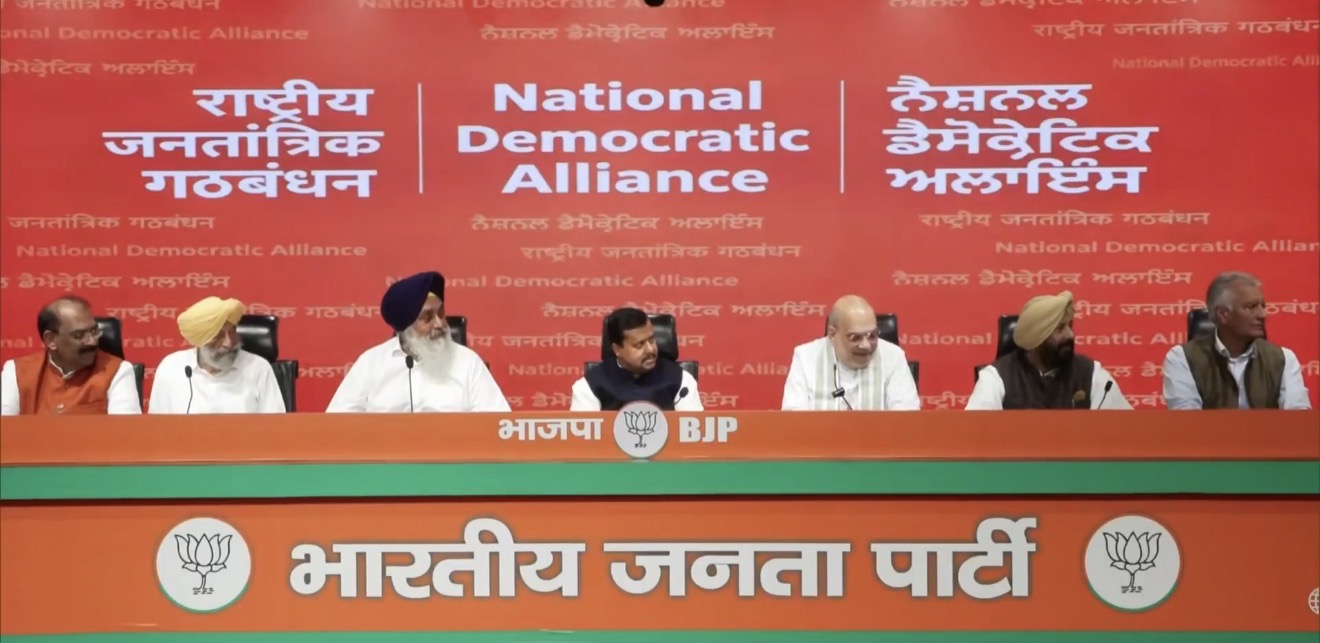
New Delhi: Six years after leaving over the farm laws, the Shiromani Akali Dal has formally rejoined the BJP-led National Democratic Alliance (NDA). Union Home Minister Amit Shah, BJP president Nitin Nabin and Akali Dal president Sukhbir Singh Badal announced the alliance at a press conference in New Delhi on the auspicious occasion of Guru Nanak Dev Ji's Prakash Purab. The two parties will contest the 2027 Punjab Assembly elections together.
The reunion raises important questions about political commitments, leadership accountability and the future of Punjab.
From separation to reunion
The BJP and the Akali Dal first formalised their alliance in 1997 and governed Punjab together for two straight terms, from 2007 to 2017. In September 2020, the Akali Dal walked out of the NDA in protest against the three farm laws. The laws were repealed in 2021, which removed the original cause of the split. Since then, both parties have contested separately. In the 2022 Assembly elections, the BJP won only two of Punjab's 117 seats, and the Akali Dal also had a poor result.
Today the old partners are back together. But Punjab's wider concerns deserve more than a handshake.
What was announced
Amit Shah said the Akali Dal would be the senior partner, or "elder brother", in Punjab, and that the chief minister would come from the Akali Dal if the alliance wins. He promised to make Punjab drug-free by December 31, 2029. He described the alliance as a symbol of Hindu-Sikh unity and said Prime Minister Narendra Modi had called both leaders to convey his good wishes. Sukhbir Singh Badal called it an emotional alliance aimed at "saving Punjab". He raised concerns about law and order and development, and argued that cooperation between the state and the Centre could help restore Punjab's prosperity.
These are significant commitments. However, the final seat-sharing arrangement and a detailed joint manifesto are still awaited.
Political convenience or commitment to Punjab?
Political parties have every democratic right to form, leave and renew alliances. Such decisions should still come with transparency and accountability.
What has changed between 2020 and 2026? What commitments has the Akali Dal secured from the central government? What concrete benefits will ordinary Punjabi families receive from this renewed partnership?
Alliances can change overnight. The problems of farmers, unemployed youth, small traders and struggling families cannot be solved by political announcements alone.
What will the people of Punjab receive?
Both parties should publicly explain their joint plan on these issues:
- A legal guarantee for Minimum Support Price (MSP)
- Farm debt and the financial security of farmers
- Unemployment and the migration of Punjabi youth abroad
- Punjab's state debt and economic development
- Drug prevention, rehabilitation and action against trafficking
- Punjab's river water rights and the Chandigarh issue
- Pending concerns of the Sikh community, including the cases of Bandi Singhs
- Better education, healthcare and industrial growth
An alliance should be judged by concrete policies, financial commitments and measurable results.
Chief ministership or public welfare?
Who becomes chief minister matters to political parties. How ordinary citizens benefit matters to Punjab.
The promise of a drug-free Punjab by 2029 is welcome, and the people of Punjab will hold the alliance to it. A deadline needs a plan: how many rehabilitation centres, what budget, what action at the border, and how progress will be measured each year.
Can commitments change with electoral circumstances?
The Akali Dal's exit from the NDA in 2020 and its return in 2026 deserve a clear public explanation. Was the repeal of the farm laws enough to settle the differences? Have the other outstanding issues been addressed? What guarantee is there that Punjab's interests will be protected if disagreements arise again?
These are fair questions in a democracy. Cooperation between the state and the Centre can create opportunities, but cooperation alone does not guarantee development, jobs or financial relief.
Punjab deserves answers, not just promises
The 2027 contest is now set to be a four-way fight among the BJP-Akali alliance, the Aam Aadmi Party, the Congress and other parties. The same standard of accountability must apply to every one of them.
Punjab's future should be debated through written commitments, transparent policies, realistic budgets and clear deadlines.
The real test of any alliance is not how well its leaders share power, but how well they serve the people. Political partnerships may change. The responsibility to Punjab and its people must remain constant.
CNC News — Cross Nation Chronical